Our New Book
Inside the Copay System
How pharmaceutical copay programs really work and where risk hides
Pharmaceutical copay programs are a critical part of patient affordability and gross‑to‑net strategy, yet most manufacturers lack visibility into how these programs actually operate once claims leave the point of sale. Inside the Copay System is a practical, executive‑level guide to the mechanics, risks, and control gaps embedded in modern copay assistance programs.
This book was written to address a problem most organizations recognize long before they can name it: the widening gap between what they invest in and how confidently they can explain where that investment ultimately goes. Copay programs have become essential to access, adherence, and competitive positioning, yet they have also grown large, complex, and operationally opaque. For many organizations, they now represent one of the least understood—and most consequential—drivers of gross‑to‑net outcomes. This book exists to close that gap, not by simplifying the system, but by making its behavior legible.
Written by Al Kenney, founder of Alpha 1C, the book draws on his more than 15 years experience working within the copay system optimizing and auditing copay programs. It explains how accumulator and maximizer programs, vendor hand-offs, pharmacy claim sequencing & misprocessing, and fragmented data create financial leakage and compliance exposure that often goes undetected. Rather than focusing on theory or policy, the book translates complex pharmacy claims and copay program operations into clear, plain‑language explanations.
Inside the Copay System
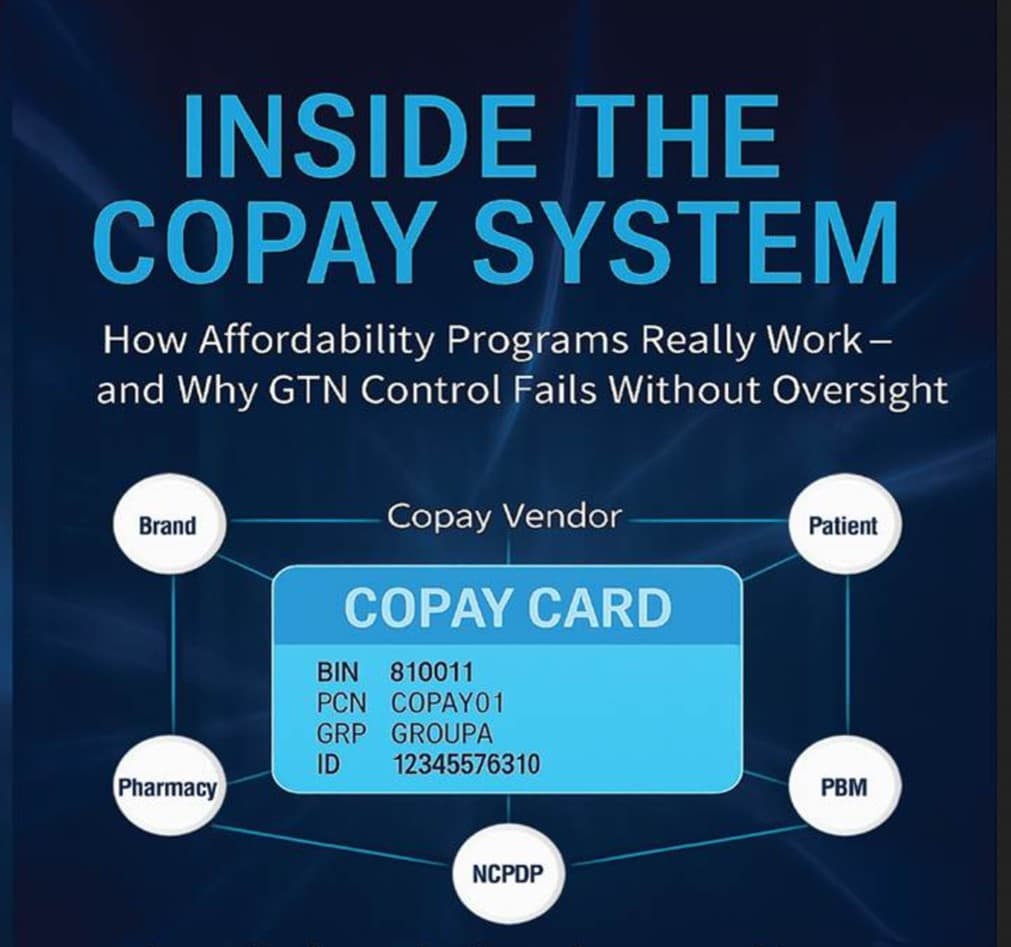
Inside the Copay System is designed for finance leaders, market access teams, compliance professionals, and program owners who are accountable for copay program performance but rarely see how decisions play out in real claims data. The book connects affordability strategy to execution, showing why strong intentions alone are not enough to protect patients—or the brand.
Beyond identifying risk, the book provides a practical framework for oversight. Readers learn how to ask better questions, recognize common failure patterns, and implement audit and monitoring approaches that improve copay program governance, transparency, and outcomes.
For organizations investing millions in copay assistance, Inside the Copay System delivers the clarity needed to align affordability programs with their original purpose—supporting patients while controlling financial and operational risk.
A Word from the Industry
The Reward is Clarity
"The pharmaceutical industry has always evolved in response to scientific breakthroughs. Now it must evolve operationally as well. This book contributes to that evolution by illuminating one of the most misunderstood mechanisms in the system. It does so not through theory, but by reconstructing how copay programs actually behave under real‑world pressure. It invites readers to examine copay programs not as simple financial tools, but as dynamic systems shaped by behavior, incentives, and operational design.For leaders willing to engage with that complexity, the reward is clarity—and with clarity comes the ability to act. The future of the pharmaceutical industry depends not only on the therapies we develop, but on the systems we build to deliver them responsibly. And that work begins with seeing the system clearly."